DeFi on Robinhood Chain: a simpler way to swap with Ophis
Explore DeFi on Robinhood Chain, meet the DEXs in Ophis's routing expansion, and learn how to find a token swap with your own wallet.
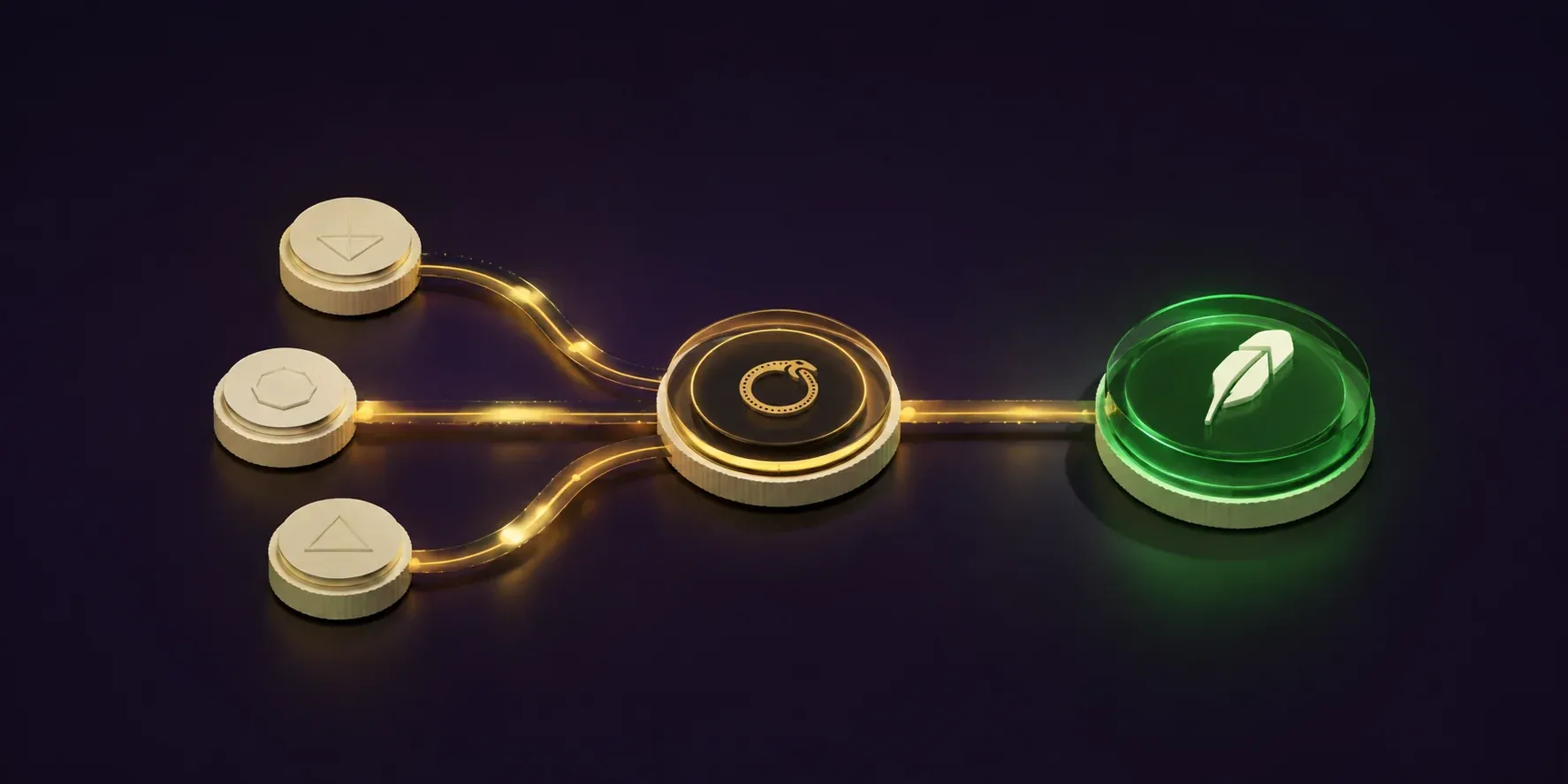
DeFi on Robinhood Chain brings wallet-based financial applications to a network built for crypto and tokenized assets. Ophis makes one part of that experience easier: finding a route for a token swap, reviewing the quote, and signing with your own wallet.
A new blockchain can feel like a new city. There are places to explore, familiar names arriving, and plenty of choices about where to start. For many people, the first useful step is simple: exchanging one token for another.
That is where Ophis fits. You bring the tokens and the trade you have in mind. Ophis brings available trading routes into one interface, helping you spend less time switching between exchange tabs.
Explore swaps on Robinhood Chain with Ophis.
What is DeFi on Robinhood Chain?
DeFi, short for decentralized finance, describes financial applications that work through blockchain-based programs. A decentralized exchange, or DEX, is one example: it lets people swap tokens using a wallet.
Robinhood Chain is an Ethereum-compatible blockchain designed around on-chain finance, including tokenized real-world assets. Its native gas token is ETH. The network gives developers a shared foundation on which to build applications, rather than keeping every activity inside a single app.
There is an important distinction for newcomers: using DeFi on Robinhood Chain is separate from trading through a Robinhood brokerage account. Your wallet, the application you choose and the assets you hold determine what you can do on-chain.
Ophis is an independent project. It is not affiliated with or endorsed by Robinhood Markets.
Why several DEXs can be good for traders
Each decentralized exchange has its own pools of tokens available for trading. That available supply is called liquidity.
As an ecosystem grows, liquidity can be spread across several exchanges. One may offer a useful route for a particular pair, while another may work better for a different amount. The result is more choice, but also more places to check.
A DEX aggregator helps bring those choices together. Instead of picking an exchange first, you start with the outcome you want: which token to sell, how much, and which token to receive.
The meaningful comparison is the quote for your trade, including its costs and minimum received. More exchange names on a list do not automatically mean a better price for every swap.
Meet Ophis and its Robinhood Chain routing expansion
Ophis uses intent-based trading. In everyday language, you sign the conditions of a trade you are willing to accept. Trading services called solvers compete to find a way to complete it within those conditions.
You do not need to understand the machinery behind each DEX to use the interface. You choose tokens, review an available quote and decide whether to sign. Ophis uses batch settlement designed to reduce exposure to common front-running and sandwich attacks.
The Robinhood Chain venues covered by Ophis’s latest direct-routing work are:
| DEX | Its place in the Ophis update |
|---|---|
| UP33 | The existing direct exchange integration, retained in the routing update. |
| PancakeSwap | A new direct integration for supported pools on Robinhood Chain. |
| RamsesX | A new direct integration that adds another source of supported token liquidity. |
| Fables | A new direct integration focused initially on the ETH/USDG market. |
Integration status, 15 September 2026: the new PancakeSwap, RamsesX and Fables routes have been implemented, but the latest Ophis rollout record still lists production activation as pending. Their inclusion here is an introduction to the routing expansion, not a claim that all three are already available in live quotes.
You can explore PancakeSwap’s Robinhood deployment documentation, RamsesX and Fables through their official sites. For trading today, the available quote in Ophis is the practical starting point.
One place to start, with your wallet in control
The appeal of Ophis is a simpler starting point. You do not have to begin by deciding which exchange should handle the trade.
Open the app on Robinhood Chain, choose a supported pair and enter an amount. If a route is available, review the expected output and the minimum received. Your signed minimum defines the boundary the order must respect.
For example, someone holding ETH might want to explore exchanging part of it for USDG. The useful question is whether a quote exists for that amount and what the order promises. This is an illustration of a trading request, not a live quote or a recommendation to buy either asset.
Ophis does not guarantee a fill simply because a token is listed. Available liquidity, token restrictions and market conditions still matter. You can read more about the approach in the Robinhood Chain DEX aggregator guide.
How to explore your first swap
- Open Ophis on Robinhood Chain. Check that the app and your wallet show the intended network.
- Choose the tokens and amount. Confirm the asset you mean to trade, especially when unfamiliar tokens use familiar tickers.
- Review the quote and costs. Look at the expected output, signed minimum and any approval your wallet requests. The Ophis pricing page explains the base fee and capped price-improvement capture.
- Sign only when the details make sense. Follow the order status through settlement or expiry. A signature alone is not a completed swap.
If your funds are on another blockchain, opening this trading form does not move them to Robinhood Chain. Consult the network’s official bridging guidance before moving assets, and keep enough ETH for any transactions that require gas.
A more approachable way into the ecosystem
DeFi becomes easier to explore when the first interaction is understandable. A clear pair of tokens, a quote you can inspect and an order you approve are a useful place to begin.
Ophis’s role is to make those trading opportunities easier to reach as Robinhood Chain’s exchange ecosystem develops. The direct-routing expansion builds on that idea: more supported sources of liquidity, brought into the same trading experience.
Choose your tokens and check an Ophis quote.
FAQ
What is Ophis on Robinhood Chain?
Ophis is an independent DEX aggregator with a Robinhood Chain trading interface. It helps users find an available token-swap route, review a quote and sign an order with their own wallet.
Which Robinhood Chain DEXs are included in the latest Ophis routing update?
The update retains UP33 and adds direct integrations for PancakeSwap, RamsesX and Fables. As of 15 September 2026, the rollout record still lists activation of the new routes as pending. A listed integration does not guarantee an available quote for every token pair.
Do I need a Robinhood brokerage account to use Ophis?
Ophis connects to a compatible crypto wallet rather than a Robinhood brokerage login. Individual assets can still carry issuer eligibility or transfer restrictions, particularly tokenized stocks.
Are swaps on Ophis free?
No. Ophis charges a 0.01% base fee plus capped price-improvement capture. Token approvals or other on-chain transactions may also require gas. Review the current pricing policy and your quote before signing.
Does Ophis offer all DeFi services on Robinhood Chain?
No. This guide covers Ophis token swaps. Lending, borrowing and other DeFi activities are separate products with their own requirements and risks.